About NuclearFACTS
Each year, the Fedoruk Centre supports research that explores the potential of nuclear science and technology to benefit society in areas such as health, agriculture and energy.
NuclearFACTS is where that work comes together. At this annual one-day symposium, Fedoruk Centre-funded researchers share the progress of their projects and the potential impact of their work. Keynote speakers provide a broader perspective on nuclear research, development and training, while researchers, leaders from academia and industry, and members of the broader community have opportunities to connect, ask questions and exchange ideas.
Join us on October 28, 2026, for NuclearFACTS.
NuclearFACTS at a Glance
| Time | Details & Project Titles | Presenter |
| 8:15 am | Online attendance login | |
| 8:30 am | Welcome and Housekeeping | Larkin Mosscrop |
| 8:35 am | Introduce Jeter Hall | Larkin Mosscrop |
| 8:40 am | Introduce the Fedoruk Centre, NuclearFACTS, and Keynote Speakers | Jeter Hall, Fedoruk Centre |
| 8:45 am | Keynote: Discuss Current & Future Thoughts on IAEA Collaboration in Nuclear Energy | Jafar Soltan, USask, College of Engineering, Associate Dean Research & Partnerships |
| 9:15 am | Combining radioimmunotherapy and antibiotics to treat prosthetic joints infection in a rat model |
Project Leader: Ekaterina (Kate) Dadachova Speaker: Kate Dadachova |
| 9:35 am | Novel macrocyclic peptides for radioligand therapy of pancreatic cancer |
Project Leader: Ekaterina (Kate) Dadachova Speaker: Kate Dadachova |
| 9:55 am | Fueling the future - Training the future nuclear workforce in Saskatchewan |
Project Leader: Alaz Munzur Speaker: Alaz Munzur |
| 10:15 | Reflections, Break, and Networking | Larkin Mosscrop |
| 10:35 | Keynote: Starting up D-Pace and Research work at SIRC | Morgan Dehnel, Selkirk College |
| 11:15 am | Panel Discussion: Discuss the collaboration between the newly funded UNENE/Fedoruk Research Chairs | Tom Kishchuk, GIEMS (Moderator); Terry Fonstad, USask, Chris Yost, UofR; Edward Doolittle, First Nations University; Deanna Herman, SaskPolytech |
| 12 pm | Reflections, Lunch, and Networking | Larkin Mosscrop |
| 12:30 pm | Crop optimization using neutron imaging |
Project Leader: Marcella Berg Speaker: Marcella Berg |
| 12:50 pm | Zirconium metal as a redox buffer agent in molten fluoride salts |
Project Leader: Arthur Situm Speaker: Arthur Situm |
| 1:10 pm | Corrosion mitigation of irradiated and welded steels in molten fluoride salts using zirconium metal as a redox buffer agent |
Project Leader: Arthur Situm Speaker: Arthur Situm |
| 1:30 pm | Development of nuclear imaging tools for pre-clinical evaluation of lung inflammation: sequential PET-CT imaging in the swine and murine models |
Project Leader: Gurpreet Aulakh Speaker: Gurpreet Aulakh |
| 1:50 pm | Monitoring xylem and phloem flow of Abscisic acid in live canola seedlings under drought conditions using PET |
Project Leader: Chris Phenix Speaker: Chris Phenix |
| 2:10 pm | Optimization driven equilibrium analysis for direct/indirect socio-economic and environmental effects of small modular reactor initiatives in Saskatchewan |
Project Leader: Gordon Huang Speaker: Gordon Huang |
| 2:30 pm | Nuclear imaging of animal models of disease |
Project Leader: Jaswant Singh Speaker: Ali Hatamkhani |
| 2:50 pm | Break and refreshments | |
| 3:05 pm | Utilization of a novel bispecific antibody for tumor imaging in human and canine malignancies |
Project Leader: Behzad Toosi Speaker: Adalia Lopes |
| 3:25 pm | Reflections & Open Discussion | Larkin Mosscrop |
| 3:45 pm | Thanks & Adjournment | Larkin Mosscrop |
Moderator, Keynotes, and Panelists

Larkin Mosscrop is a seasoned environmental and nuclear science professional currently serving as Manager of Environmental Services, Clean Energy & Community Engagement at Kinectrics, a leading provider of engineering, testing, and consulting services to the nuclear and energy sectors. She started her career in the sciences, having her masters in science in biology from Queen’s University. She has been in the nuclear industry for over 10 years but has been an educator for over 20, with 15 years specifically related to science communication and education. This strong passion for science and education led her to complete her PhD in Public Policy on science and energy literacy in youth.
She is passionate about energy and believes that the future energy system must be a mix of non-emitting sources to power our future. She volunteers with the CNS education program, the Renfrew County Science Fair, and local animal rescues. She is an outdoorsy person and can often be found hiking in a forest with her rescue dogs, swimming in the river, or at home reading a book with one of her rescue cats.
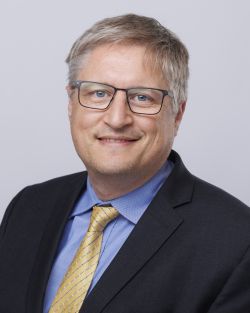
Dr. Jeter Hall serves as the Executive Director of the Fedoruk Centre. Jeter completed his PhD at the University of Utah, studying gamma rays produced by dark matter annihilation. He went on to complete a postdoctoral fellowship at Fermilab, where he contributed to underground dark matter experiments including CDMS-II, SuperCDMS, and COUPP. Jeter’s work ranged from improving electronics performance in cryogenic detectors to analyzing acoustic signatures in bubble chambers and deploying new technologies at SNOLAB.
From 2017, Jeter held the position of Director of Research at SNOLAB, one of Canada’s premier facilities for astro-particle research. In this role, Jeter was accountable for the successful execution of the laboratory’s large suite of projects in tandem with the successful operation of its scientific program. Jeter worked across organizational boundaries to facilitate the successful completion of the lab’s portfolio of projects and programs alongside the lab’s organizational commitments.
Jeter joined the Fedoruk Centre as executive director in July 2025 to accompllish impacts in the following areas: (1) Nuclear imaging tools and methods to advance life sciences, agri-biotechnologies and medicine; (2) Material sciences, through nuclear techniques, such as neutron scattering, to improve energy, health, and transportation; and (3) Understanding the practical and social aspects of nuclear energy, to inform decision-making towards a clean, sustainable future.
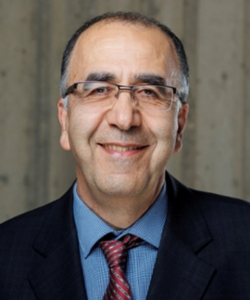
In coordination with the International Atomic Energy Agency (IAEA), he led the Canadian Nuclear Energy Management School in 2025 and the Canadian Executive Nuclear Energy Management School in 2026, providing strategic leadership and oversight for both initiatives.
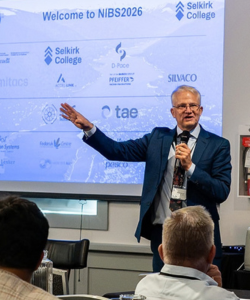
Dr. Dehnel has always advanced research, development and commercialization of particle accelerator technologies such as ion sources, beam diagnostic devices and beam handling equipment. Since expertise for such activities was scarce, a process was developed to grow talent in the form of graduate student and vocational intern projects aimed at shedding light on publishable discovery science questions, which also had potential commercial applications. In this way, students were trained. And then these students became key employees or post-doctoral fellows. Certain measurements and developments were indeed commercially viable, and others were not. Nevertheless, he and D-Pace were always proud to advance science knowledge and the training of people regardless of whether a commercial outcome occurred or not.
Dr. Dehnel now continues to utilize this tried-and-true technique for the broader benefit of Canadian society in the public/private collaboration, which is the Selkirk Ion-source Research Centre (SIRC). Its key partners are at present Selkirk College, TRIUMF, the University of Victoria, the University of Saskatchewan, KAST, D-Pace and Busch Vacuum. SIRC leverages Dr. Dehnel's substantive network, and the scientific, technical and business knowledge he has gained over the years.
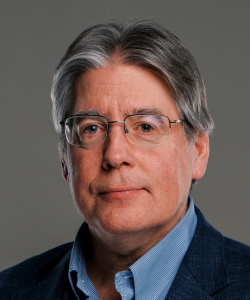
Tom Kischuk started his career in the field of heavy industrial manufacturing for power generation equipment in 1989 at a then brand-new company, Hitachi Canadian Industries Ltd. Over the next 26 years he worked in many roles to support the needs of a growing business and in 2006 was appointed the first Canadian President and CEO of the Canadian operations. Tom started his consulting business, TPK Management Consulting Inc., in 2020 to continue supporting organizations in their development journeys. He is currently serving as the founding Executive Director of the Global Institute for Energy, Minerals and Society (GIEMS) and is a Director of Max Power Mining Corp. and Rivercity Innovations Inc. Tom is also Chair of the USask College of Engineering Dean’s Advisory Board. He has a BSc and MSc in Mechanical Engineering from the University of Saskatchewan.
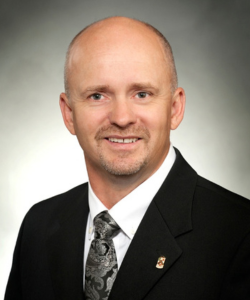
Dr. Fonstad serves on the board of directors of the International Minerals Innovation Institute (IMII), Genome Prairie, Ag-West Bio and the Prairie Swine Centre as well as Chair of the Board for the Global Institute for Energy, Minerals and Society (GIEMS). In his role as AVP Research and Chair of the Board of GIEMS, Dr. Fonstad leads initiatives related to the university’s research and training capacity to meet provincial needs as nuclear energy develops.
Dr. Fonstad’s personal research is related to environmental research for animal agriculture, and his academic home is the Department of Civil, Geological and Environmental Engineering.
Dr. Fonstad is a registered professional engineer and professional agrologist. He is a Fellow of Engineers Canada and honorary Fellow of Geosciences Canada. He has served two terms on the council of the Association of Professional Engineers and Geoscientists of Saskatchewan (APEGS) as well as one term on the executive and served as President in 2019-20. He was awarded the Public Service Award from the RM of Blucher No 343 for his service on municipal council from 2002-2017. At the 2024 APEGS awards ceremony, Dr. Fonstad was awarded the Brian Eckel Distinguished Service Award.
Edward Doolittle is Kanyen’kehake (Mohawk) from Six Nations in southern Ontario. He earned a PhD in mathematics (partial differential equations) from the University of Toronto in 1997. From then until 2001 he worked for Queen’s University’s Aboriginal Teacher Education Program, helping to administer the program and teaching Indigenous mathematics education. From 2000 to 2001 he studied the Mohawk language in immersion with Onkwewenna Kentsyohkwa (Our Language Group) on Six Nations.
From 2001 he has been on the faculty of First Nations University and the University of Regina, currently as Professor of Mathematics and Associate Dean, Research and Graduate Programs. He is a Fellow of the Canadian Mathematical Society (CMS), recipient of the Adrien Pouliot Award from the CMS in recognition of significant contributions to mathematics education in Canada, and recipient of a Governor General’s Gold Medal. From 2024 through 2025 Edward served as co-Chair, Indigenous, for the Research Ethics Board at the University of Regina.
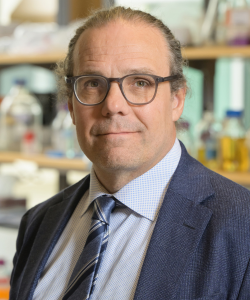
Dr. Chris Yost, Vice President- Research, University of Regina. Panelist: Discuss the Collaboration Between the Newly Funded UNENE/Fedoruk Centre Chairs
From 2007 to 2017 Chris was a Canada Research Chair in Environmental Microbiology. He is the co-Director of the Institute for Microbial Systems and Society, where he supervisors a diverse team of undergraduate, and graduate student researchers. In addition to maintaining an active research lab that uses genomic technologies to study agriculturally relevant interactions between microbes and plants, he has had a long-term commitment to serving the University in supporting its research enterprise.
Chris was the chair of the Council Committee on Academic Mission and the chair of the Council Committee on Research. He also has national experience in research policy work, and was a member of NSERC’s Committee on Discovery Research while serving as a Group Chair for NSERC’s Discovery Grant program. He served the Canadian Society of Microbiologists in leadership positions for many years. Prior to coming to the University of Regina in 2003, Dr. Yost was a research scientist with Agriculture and Agri-Food Canada at the Lacombe Research Centre and later worked internationally as a research associate at the University of Aarhus in Denmark.
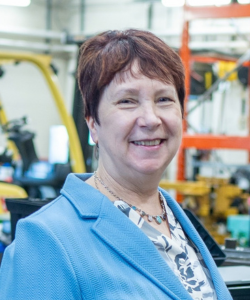
Deanna Herman is interim dean of the Faculty of Technology and Skilled Trades at Saskatchewan Polytechnic, assuming the role in 2026. The Faculty encompasses four schools, which include most of the engineering, technology and trades training at Sask Polytech. Deanna oversees the strategic direction of programming in diverse sectors—from agriculture and mining to technology, natural resources and renewable energy. The Faculty also features an embedded applied research group, which supports the province’s economic growth and a cleaner energy future.
Deanna has been at Sask Polytech since 2002, first as an instructor, and later as a program head and academic chair. In 2022, she became an associate dean with the Faculty of Technology and Skilled Trades, responsible for two schools: the Nutrien School of Mining, Manufacturing and Engineering Technology, and Agriculture, Natural Resources and Sustainability. She holds a Master’s degree in Communication and Technology from the University of Alberta.
Project Presenters
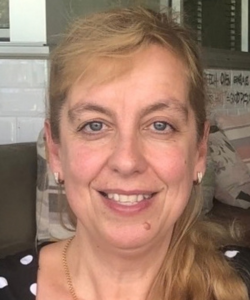
Ekaterina (Kate) Dadachova, PhD, joined University of Saskatchewan in Canada late in 2016 as a Fedoruk Center for Nuclear Innovation Chair in Radiopharmacy, and a Professor of Pharmacy.
Before joining U of S she held a Professorship in Radiology, Microbiology and Immunology at the Albert Einstein College of Medicine in New York, USA from 2000 to 2016. Her research interests are radioligand therapy of cancer, infections and autoimmune diseases, as well as interaction of melanized fungi with ionizing radiation and melanin-based radioprotectors.
She published >210 papers, 13 book chapters, and has 8 US patents. She received several awards such as Philips Young Investigator Award by RSNA, Young Professionals Award from the SNM, Mary Kay Ash Research Award, Top 10 researchers at the Albert Einstein College of Medicine in 2013, 2017 Burroughs Welcome Award, 2020 University of Saskatchewan Distinguished Researcher Award and 2024 Saskatchewan Health Research Foundation (SHRF) Years of Service Award. She is in the top 2% of cited scientists worldwide according to Stanford University 2024 database. Since January 2026 she serves as an Editor in Chief of Cancer Biotherapy and Radiopharmaceuticals.
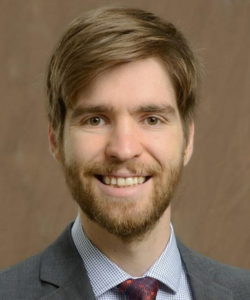
Arthur Situm is the Canada Research Chair (CRC) Tier 2 in Small Modular Reactor Safety (SMR) Safety and Licensing and a professor in the Energy Systems Engineering program at the University of Regina. He serves as head of the SMR Fuel Corrosion Lab (SMR-FCL), overseeing around 2 million dollars of research funding focused on radioactive waste management, development of novel fuel for SMRs and the study of molten salts for advanced SMR designs.
He holds degrees in chemistry from Wilfrid Laurier University (BSc and MSc) and the University of Saskatchewan. He has held various senior leadership positions in the Canadian Nuclear Society (CNS) since 2018, and serves on CNS Council and as co-chair of the Generation 4 and SMR (G4SR) Division and International Conference.
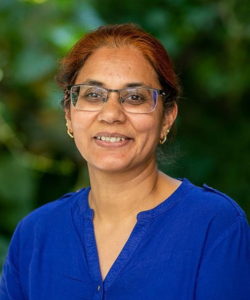
Dr. Aulakh joined the Department of Small Animal Clinical Sciences as the Fedoruk Chair in Imaging Science in August 2016.
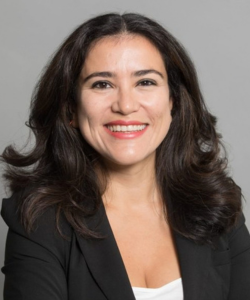
Dr. Alaz Munzur has been an Assistant Professor of Economics at the Johnson Shoyama Graduate School of Public Policy, University of Saskatchewan, since 2023. Her research focuses on government regulation and policy on energy and environment, international cooperation on climate issues, international trade policy, and economic history. Her current work includes an examination of how climate policy instruments, such as carbon pricing and targeted subsidies, interact across industries and trading partners, and what those interactions mean for emissions outcomes. She also studies the economic and environmental impacts of infrastructure development in Canada’s North.
Previously, she held positions at Simon Fraser University’s School of Public Policy and at the University of Calgary. She holds a PhD in Economics from the University of Calgary.
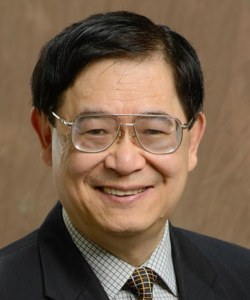
Gordon Huang is a Professor and ex-CRC Tier 1 in Energy and Environment at the University of Regina. He is Fellow of Canadian Academy of Engineering, President of International Society for Environmental Information Sciences, and Editor-in-Chief for J. of Environmental Informatics (JCR Q1, and impact factor 7.3). He holds BSc from Peking University, MSc from Simon Fraser University and PhD from McMaster University. He produced over 1400 journal papers with h-index 90 in Science Citation Index under Web of Science (over 46,000 citations, and Google Scholar h-index over 100).
He supervised over 140 Master/PhD students (with over 40 of them being faculty members at universities in Canada, USA, UK, Singapore, Hongkong and China). His pioneering work in energy and environmental risk management has been recognized as a significant innovation, and has influenced government and business approaches for tackling environmental challenges and formulating related policies.
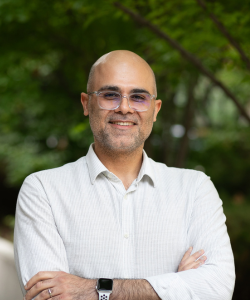
He spent a year with the Medical Oncology and Bone Marrow Transplantation Service at North Carolina State University in the United States. After returning to Iran, Dr. Hatamkhani established and led the country’s first veterinary oncology service, where he practiced veterinary oncology for six years. During this period, he also conducted cancer virotherapy research at a human cancer research centre.
After moving to Canada, Dr. Hatamkhani completed a small animal internship at the Atlantic Veterinary College in Prince Edward Island before joining WCVM, where he is pursuing his lifelong goal of becoming a board-certified veterinary medical oncologist.
Dr. Hatamkhani is passionate about teaching and lifelong learning. Outside veterinary medicine, he enjoys listening to a wide variety of podcasts and audiobooks.
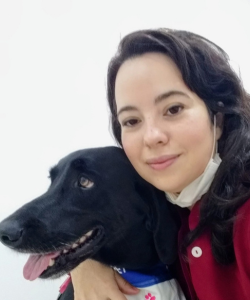
Adalia Lopes is a graduate student at the Western College of Veterinary Medicine, University of Saskatchewan. Her research focuses on evaluating radiolabeled antibodies targeting specific cancer-cell markers in a comparative oncology approach. These tracers enable real-time imaging of small tumors in xenograft mice of human and canine cancer. Her work is supported by the Fedoruk Research Funding, the Companion Animal Health Scholarship, and the DuMont Oncology Research Fund Graduate Scholarship.
Project Advisory Committee
The Project Advisory Committee (PAC) is an expert peer review committee that advises the Fedoruk Centre Executive Director and the management team on the porfolio of projects funded by the Fedoruk Centre.
The PAC provides two roles: provides advice on project proposals received following a Call for Proposas by reviewing and ranking each screened proposal; and provides oversight on ongoing projects that have been selected for funding.
Event Logistics
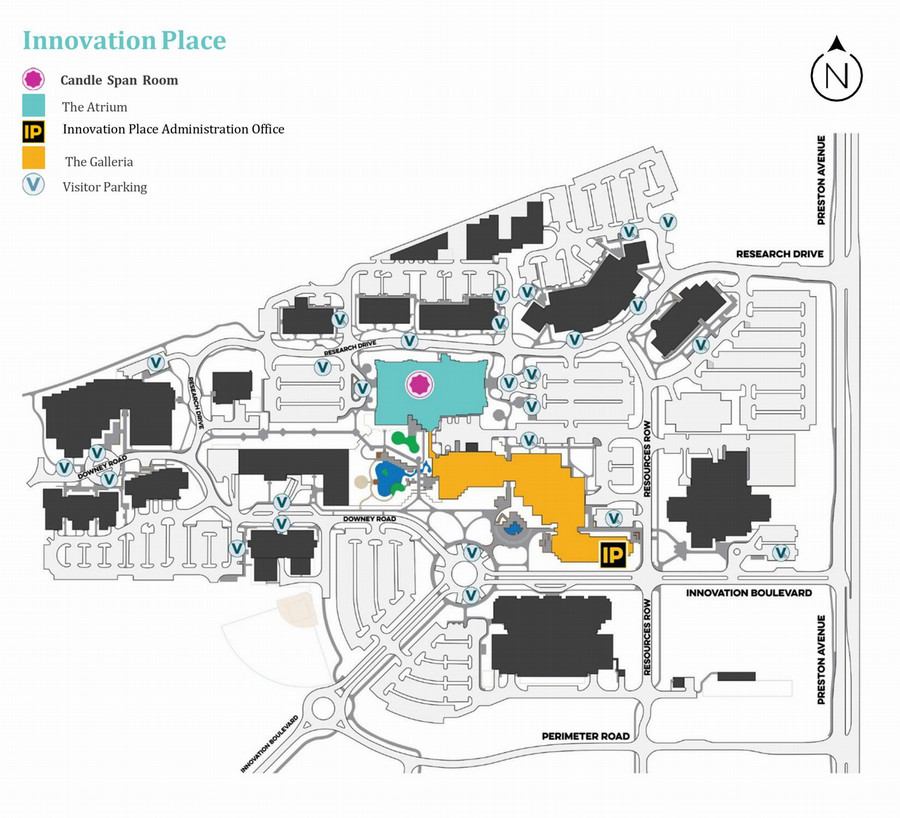
NuclearFACTS will take place both virtually and in person in Saskatoon. The event is held at Innovation Saskatchewan's Research and Technology Park, in the Atrium Building at 111 Research Drive.
Visitor Parking is availalbe upon request. Please contact us if you require a parking pass for the day.